

Documentation
Everything about LafaekTOEFL AI Coach
Why it exists, how to use it, and how it is built: a free, open-source AI coach for the new 2026 TOEFL, powered by Meta's Muse models.
- guides
- 6guides
- TOEFL 2026 task types
- 12TOEFL 2026 task types
- AI models
- 5AI models
- open source
- MITopen source



Read in this order
From the story to the code
Start with why the app exists, see it in action, then go as deep into the technology as you like.
- 1
Start here
Why I built LafaekTOEFL
Old books, high prices and no feedback in Dili, Timor-Leste, and how that became a free AI coach, now also in VR on Meta Quest.
6 min readRead - 2
Using the app
User guide
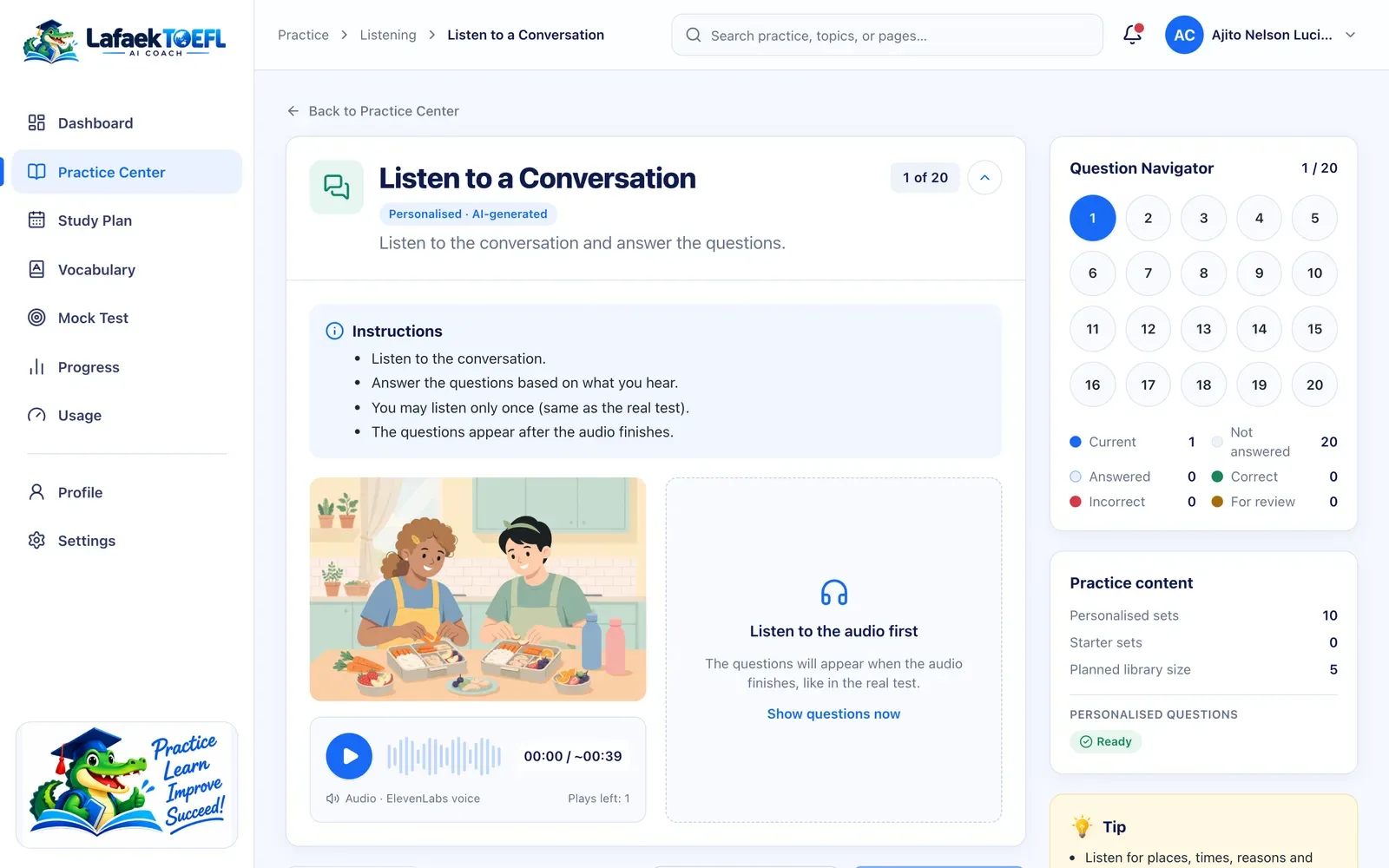
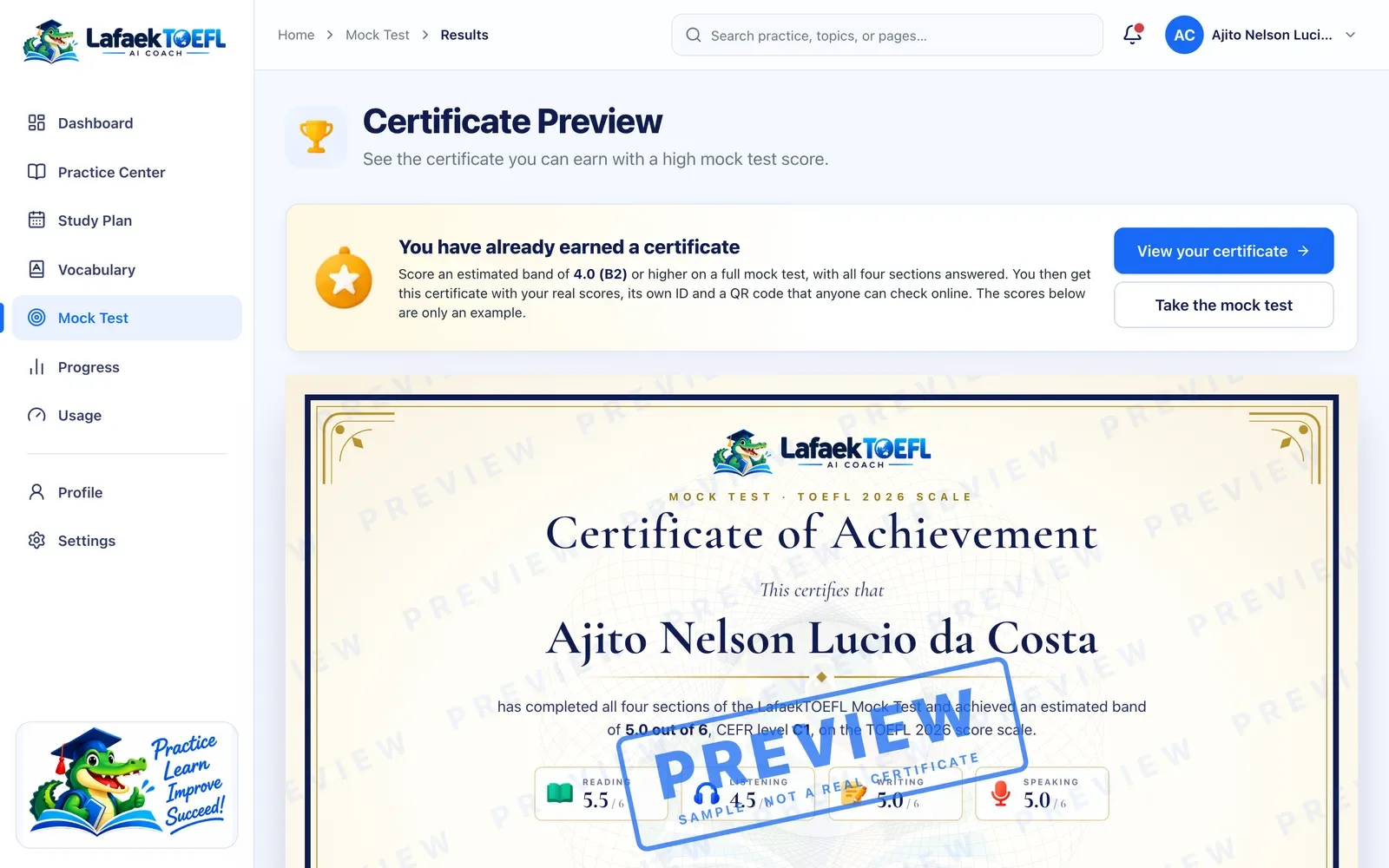
A tour of the app with screenshots: study plan, all 12 practice types, vocabulary, progress, mock test, certificates and the VR Study Room.
10 min readRead - 3
Using the app
VR Study Room
Why the TOEFL is better practised in VR, and how to use the hands-first study room on Meta Quest: getting in, gestures, the 9 tasks, the 3D speakers and interviewer, and the progress wall.
13 min readRead - 4
Technical
How it works
Architecture diagrams: Vercel, Render, PostgreSQL, AWS S3, every Meta model, the job queue, mock-test scoring, the database, the VR Study Room and signing in on Quest.
14 min readRead - 5
Technical
Cost per study plan
What one study plan really costs in AI calls: measured tokens, pictures and voice from a real plan, priced with Meta's and ElevenLabs' published rates.
4 min readRead - 6
Technical
Developer guide
The project README: features, models and architecture, then how to set up, run and deploy your own copy.
21 min readRead


User guide
See every screen before you sign up
The user guide walks through the real app with screenshots: the AI study plan, all 12 practice types, vocabulary from your own questions, progress, the timed mock test and verifiable certificates.
Open the user guide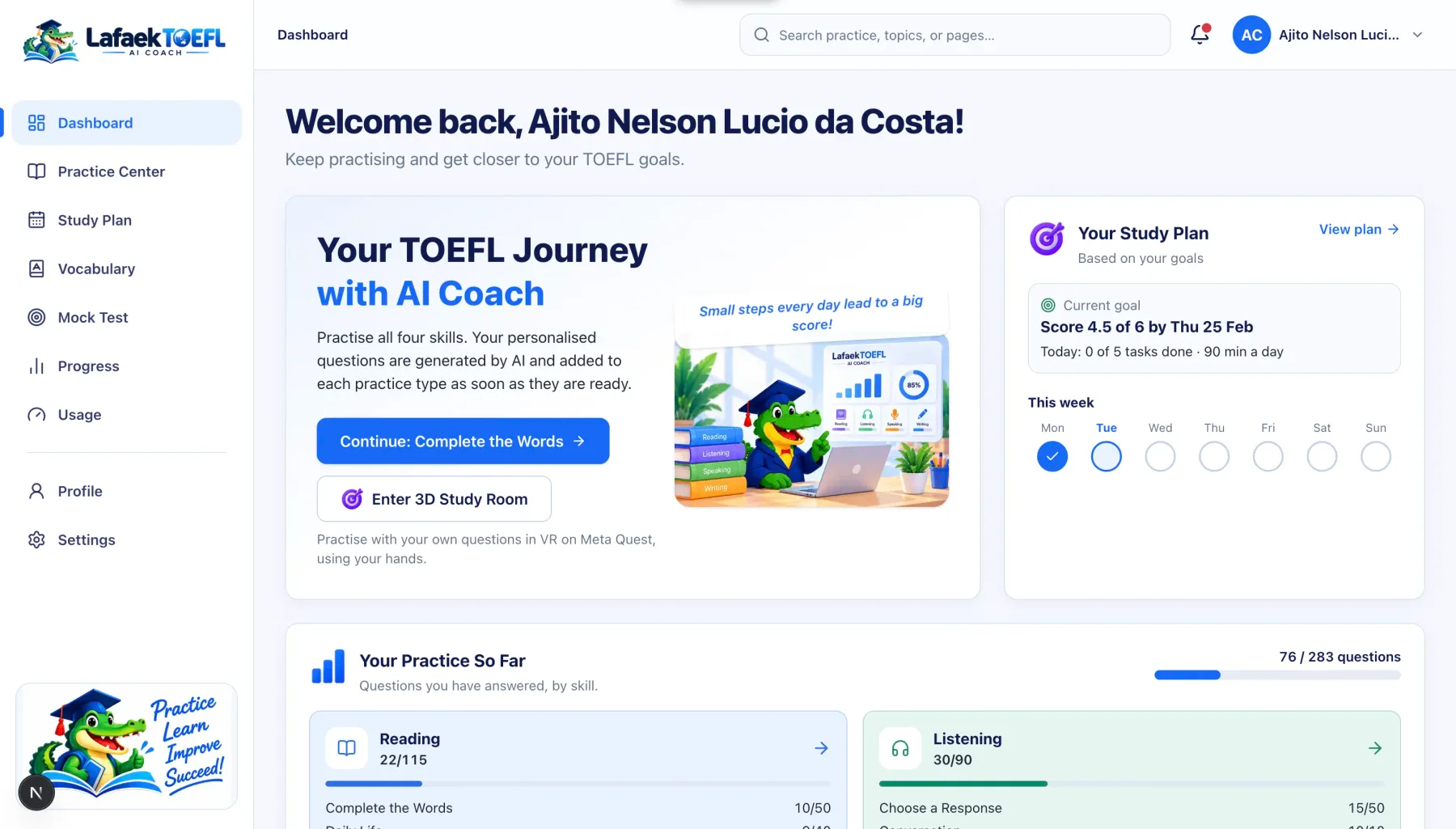
How it works
Built with Meta's newest models
A Next.js web app on Vercel, a background worker and PostgreSQL on Render, and private media in AWS S3. The worker and the web app share work through a job queue in the database.
- Meta
muse-spark-1.3Questions, vocabulary, study schedules, AI scores and coaching - Meta
muse-spark-1.2Automatic fallback for text - Meta
muse-image-1.0Pictures for practice questions - Meta
muse-voice-transcribe-1.0Speech-to-text for spoken answers - ElevenLabs
eleven_multilingual_v2Voices in five English accents
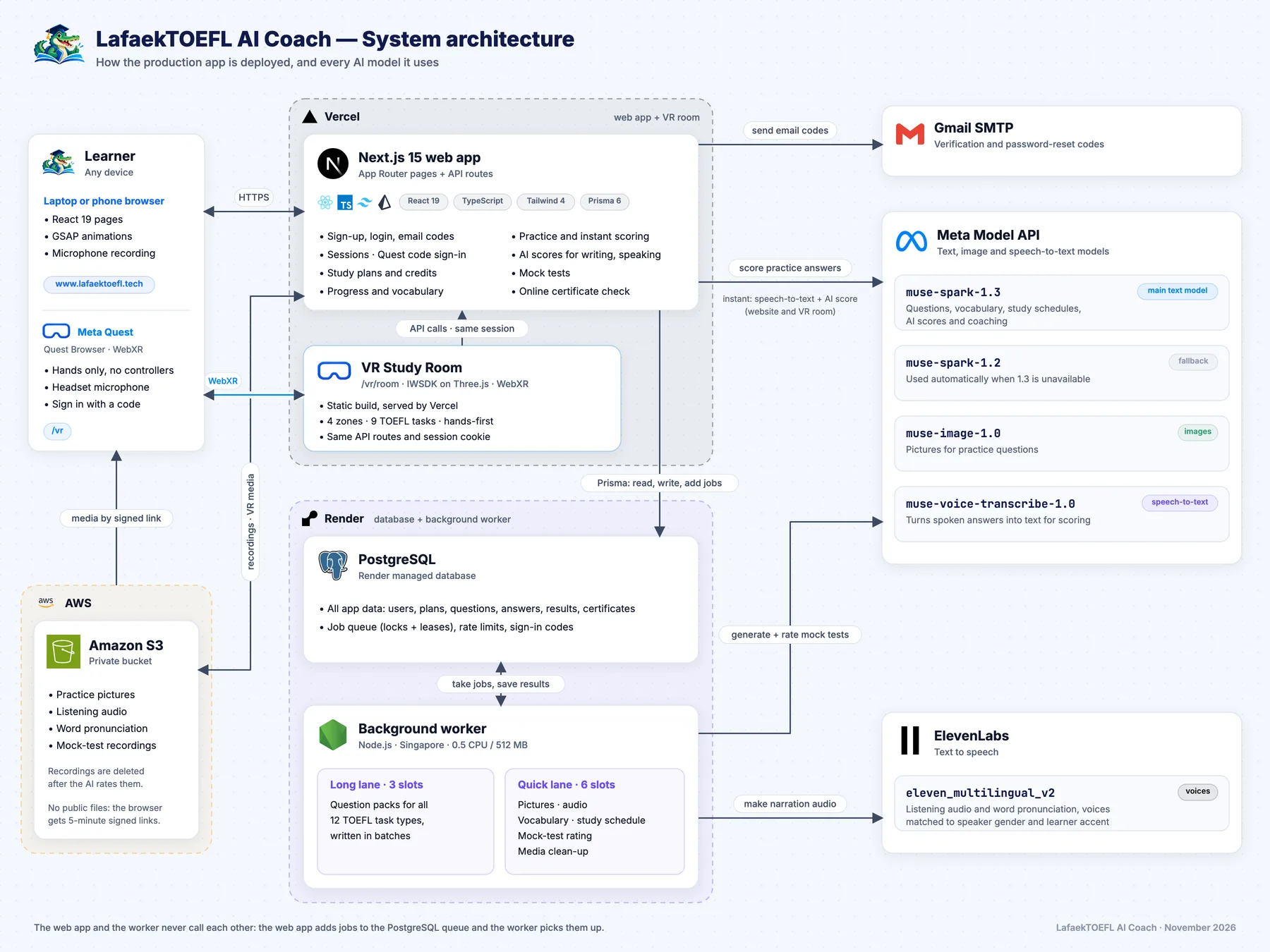 System architecture and 4 more diagrams
Ready to prepare for the new TOEFL?
Start free with a personal AI study plan and a full mock test, or deploy your own copy from GitHub.